Refdash - A better way to interview
Designing a technical interviewing and recruiting platform from the ground up.
Context & scale
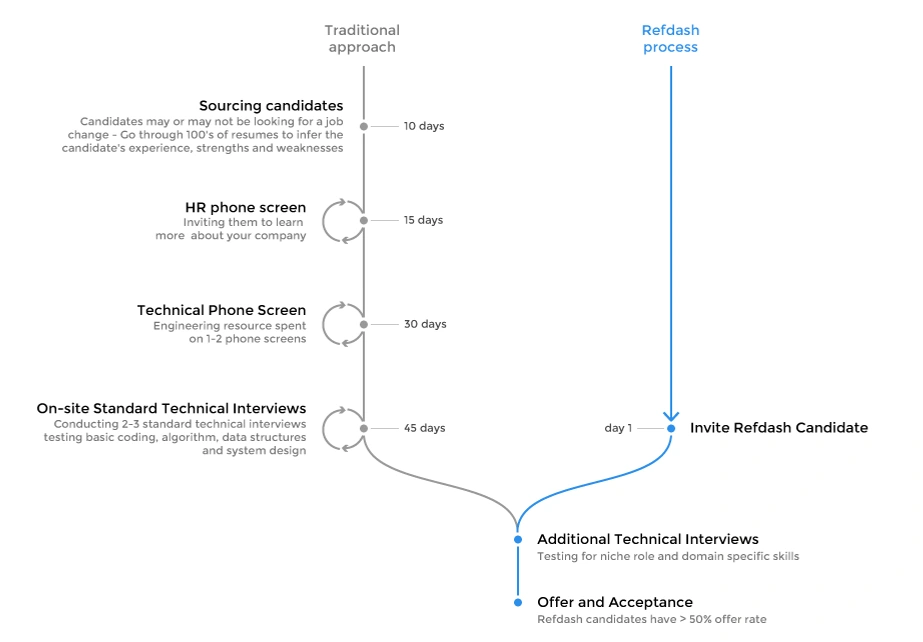
Technical hiring traditionally required engineers to repeat similar screening interviews with multiple companies - invested substantial time preparing and interviewing; employers devoted precous engineering hours to assessment while often relying on resumes and incomplete signals of ability. Subjective judgments could also introduce inconsistencies and opportunities for bias.
Refdash set out to change that.
Role & ownership
I joined Refdash at the idea stage, working alongside two founding engineers as the sole designer. I helped define the product, infuence roadmap and designed the experience across three distinct user roles.
My workflow was unusually hands-on as much of the interface work happened directly in code. Rather than handing off only static design files, I pushed front-end work to the shared repository and iterated with the engineers in the implementation itself.
I regularly interviewed all three user groups, observed behavior in Hotjar and used feedback from our operations team to identify friction and pain points.
What we set out to achieve
Refdash was not intended to be just another job board or coding-test tool. Four principles informed its product direction and the decisions we made along the way.
- Reduce repeated early-stage interviews by turning a rigorous technical assessment into useful evidence that could be reviewed by more than one employer.
- Help capable engineers stand out through demonstrated skills, rather than relying primarily on resumes, personal networks, or conventional screening signals.
- Support more consistent evaluations through standardized criteria and limited exposure to candidates' identities wherever practical.
- Keep technical interview practice and feedback free for candidates while giving employers a useful way to discover pre-assessed engineering talent.
Designing the entire hiring journey
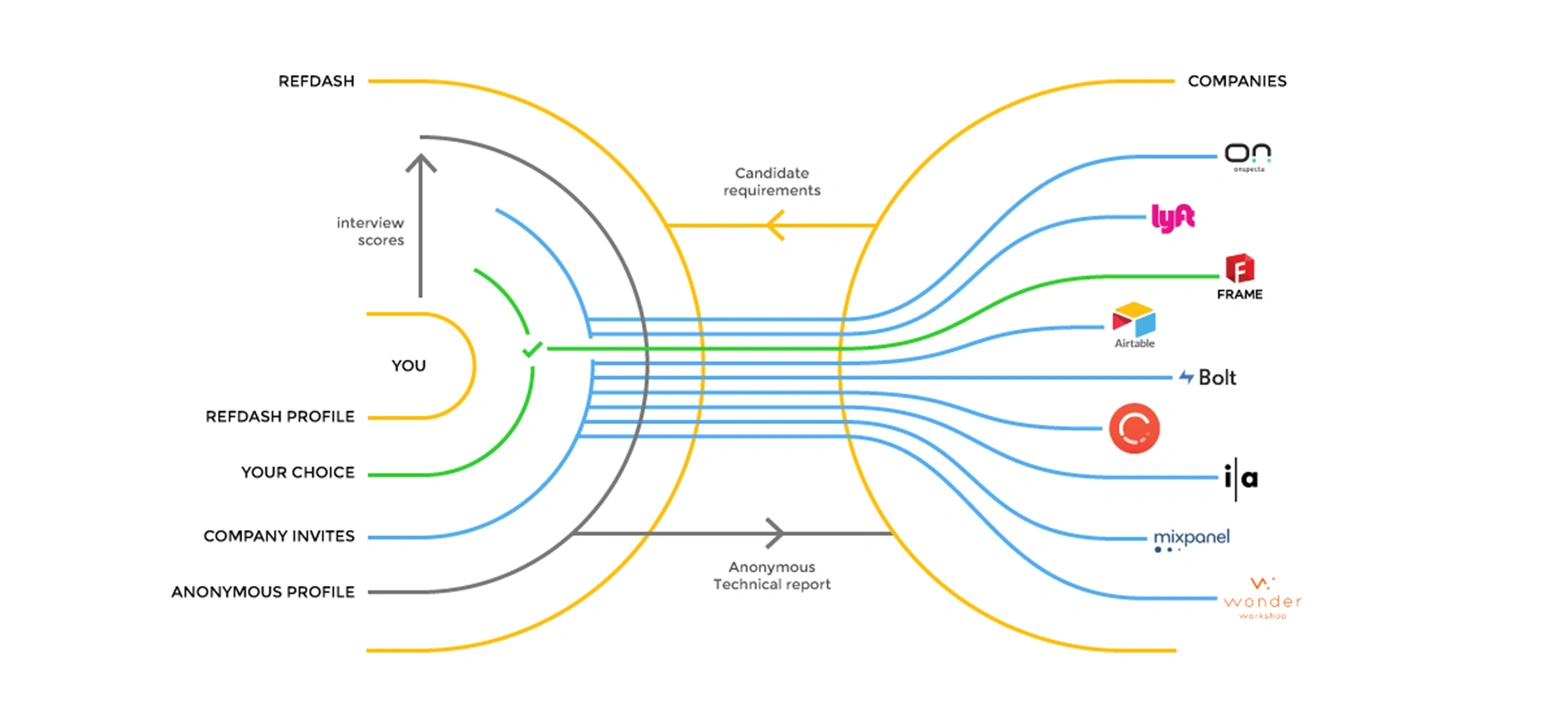
Refdash had to support different tasks without fragmenting into disconnected products. The experience connected a sequence of actions and information across all three roles
- Candidates booked interviews, practiced technical problems, reviewed feedback, explored companies, indicated interest, and could apply to open roles.
- Interviewers managed availability, conducted real-time assessments, captured observations and code snapshots, and completed structured reports.
- Recruiters defined hiring needs, examined matching anonymized assessments, and progressed candidates toward interviews with their companies.
Ability before identity
Protecting anonymity shaped the platform's architecture and flows. Interviewers received no candidate identities before calls, and cameras were optional, keeping early assessment focused on code and problem-solving.
Recruiters first reviewed anonymized technical reports, not names, photos, or resumes. As employers needed CVs for existing workflows, we later introduced Request Resume, letting candidates decide whether to share theirs and disclose their identity. The balance was protecting personal information while keeping the path to real hiring conversations and job opportunities open.
A shared workspace with role-specific tools
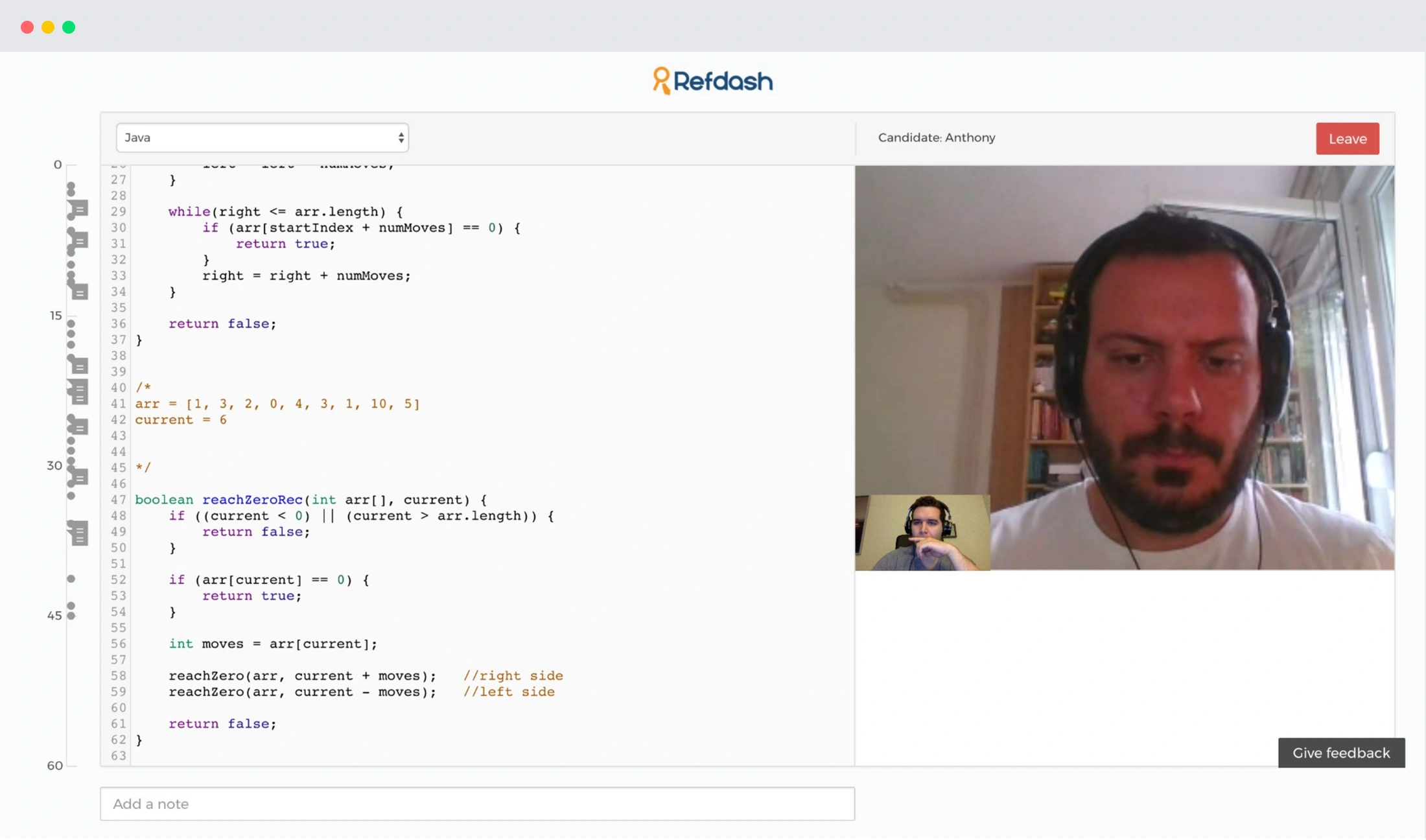
The heart of Refdash was a live interview environment combining video communication and a collaborative code editor on one screen. Candidates and interviewers saw the same code update in real time, enabling discussion, follow-up questions, and observation of problem-solving approaches as the work unfolded.
Although both people shared the assessment experience, their responsibilities were different. Candidates needed to focus on reasoning, coding and communication. Interviewers needed to observe performance while capturing material that would help them write a fair, detailed report afterward.
The interviewer interface therefore included additional controls for recording comments, saving code snapshots, and marking moments that would matter during evaluation. These supporting tools created continuity between the live session and the assessment workflow rather than forcing interviewers to reconstruct everything from memory.
Giving candidates real choice
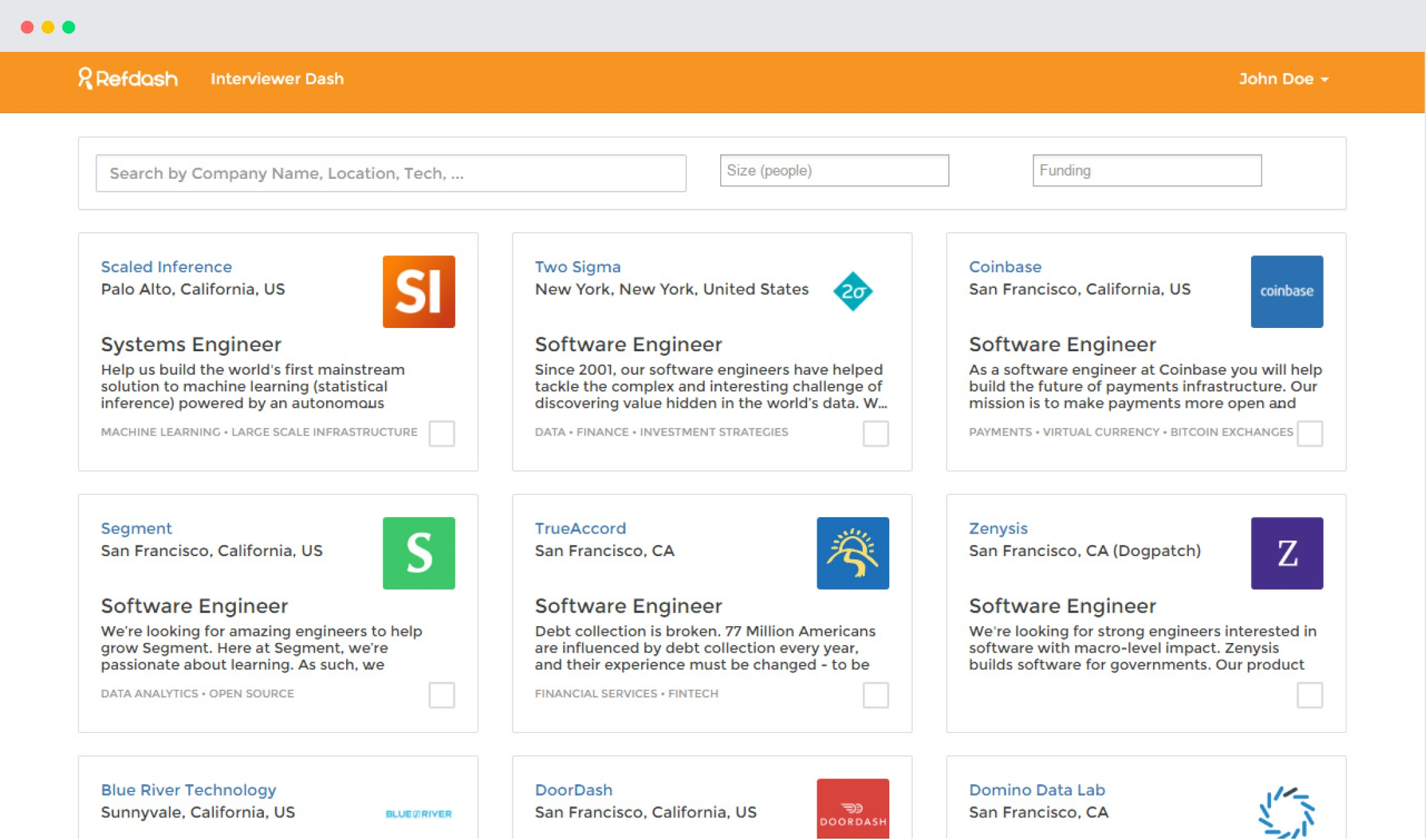
The candidate experience did not stop after interview feedback. Candidates could explore participating companies and roles, indicate which employers interested them, and apply to opportunities they preferred.
The aim was to connect better interview preparation with meaningful professional opportunities while preserving candidate choice over where and how to proceed.
Candidates could discover relevant employers, express interest, and pursue opportunities on their own terms.
Turning one interview into meaningful evidence
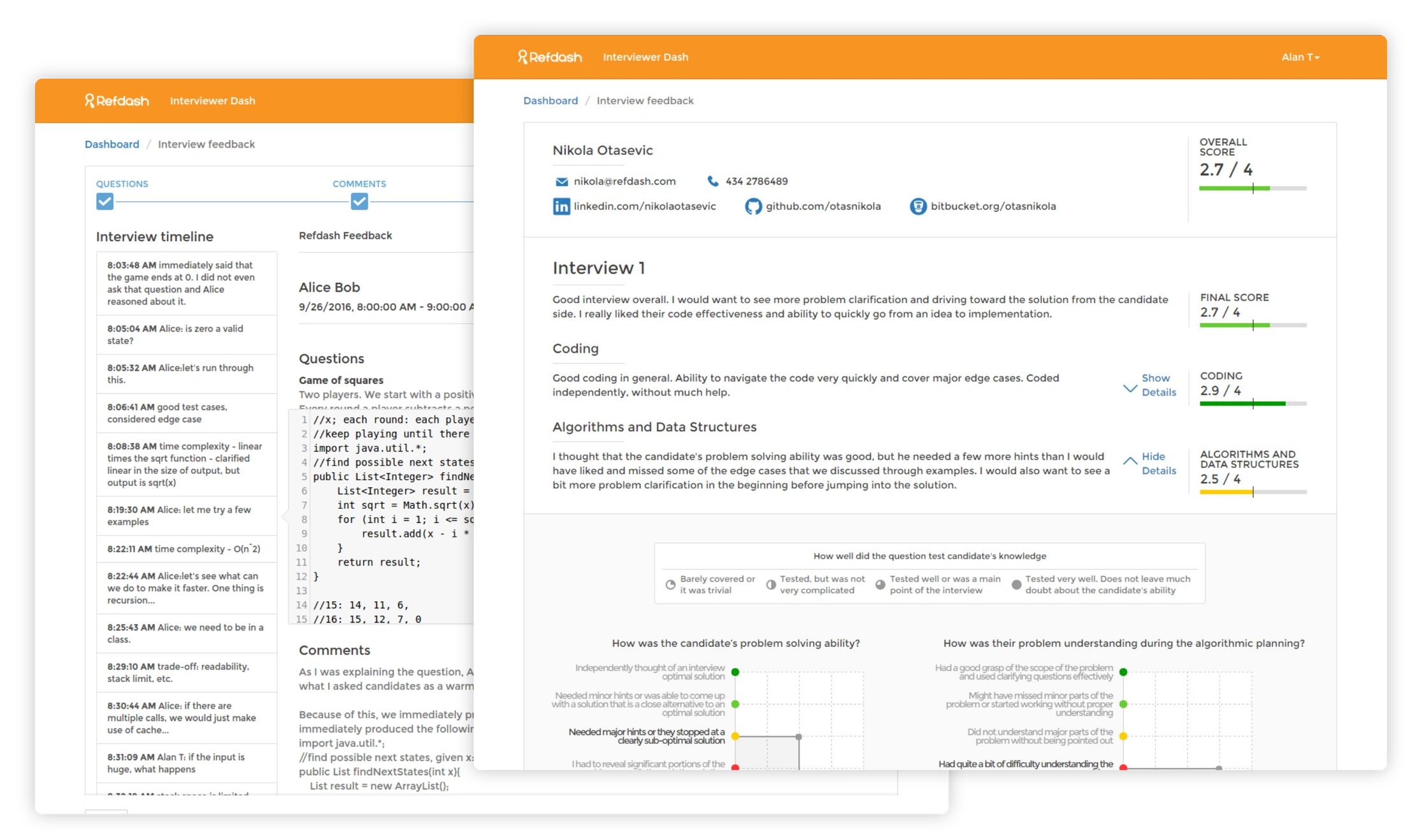
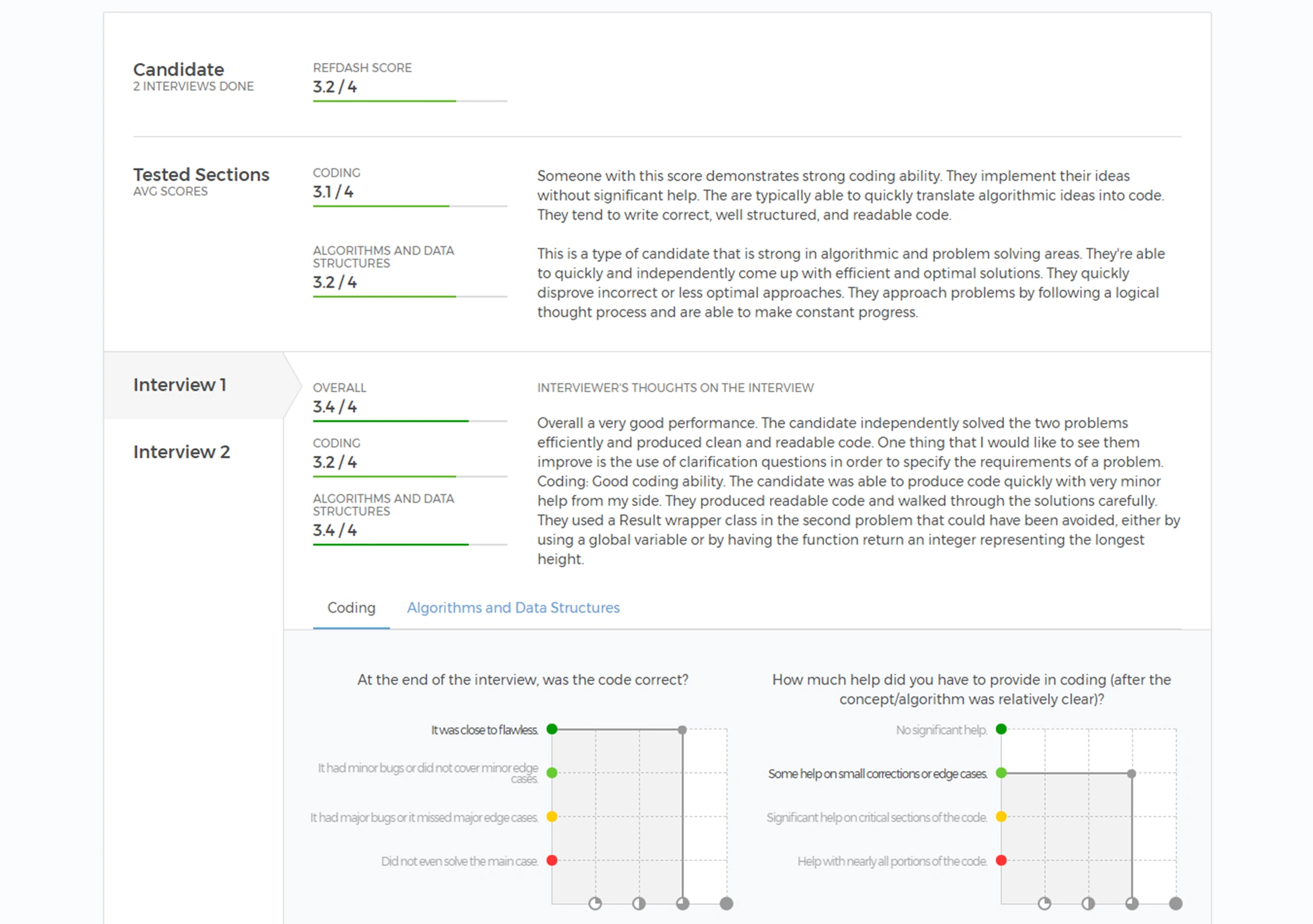
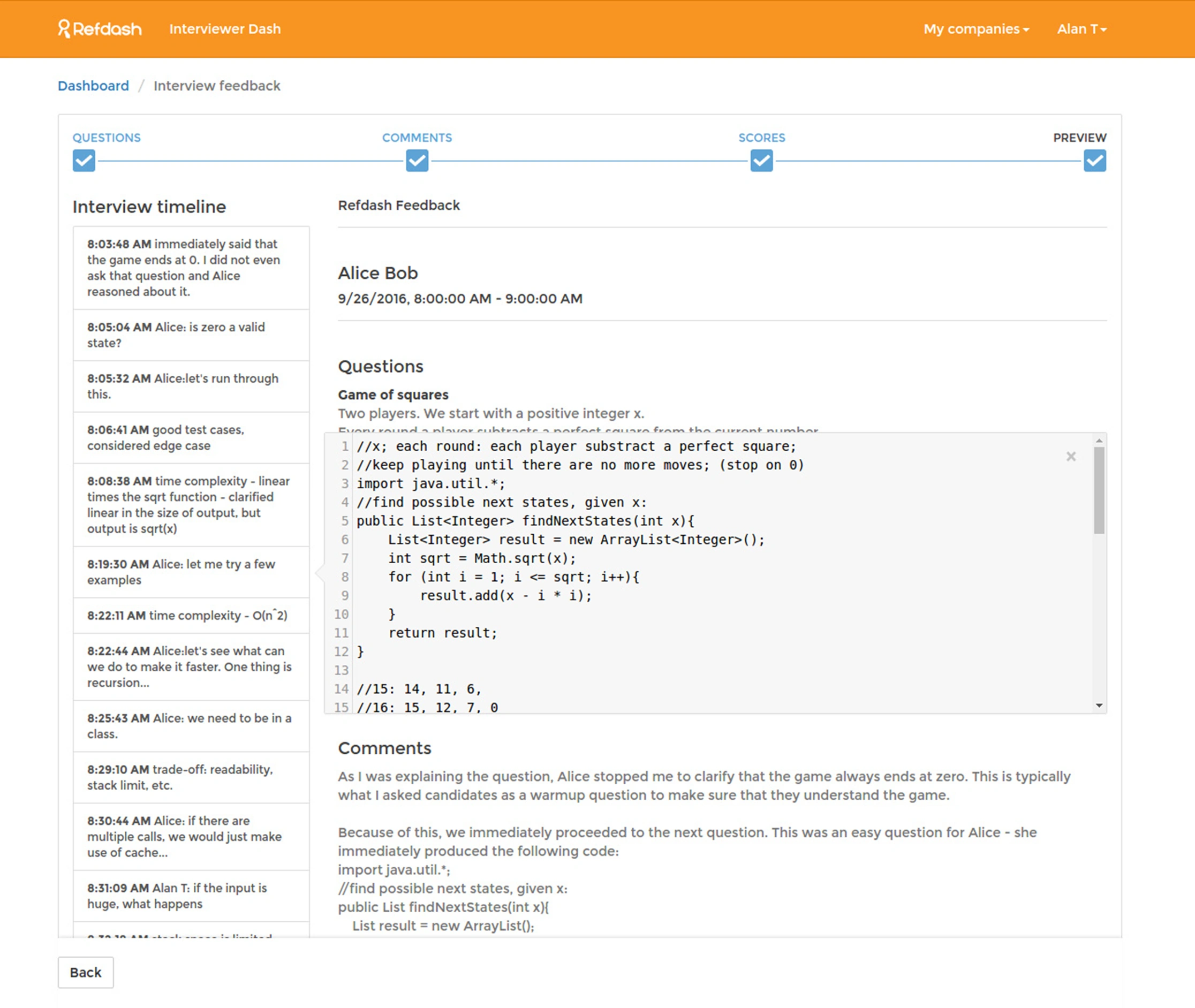
For an interview to be useful beyond a single call, its outcome had to be understandable to both candidates and employers. We designed an interviewer workflow that brought together timestamped observations, problem statements, relevant code, written comments, and standardized scoring criteria.
The assessment covered areas such as coding, algorithms and data structures, and, where appropriate, system design. Instead of reducing performance to one opaque number, the report combined a high-level score with section-specific ratings, explanations, recommendations, and the option to explore individual interviews in more detail.
For candidates, it provided feedback they could learn from. For recruiters, it offered a technical assessment that could be reviewed without initially seeing a resume.
Helping companies find the right candidates
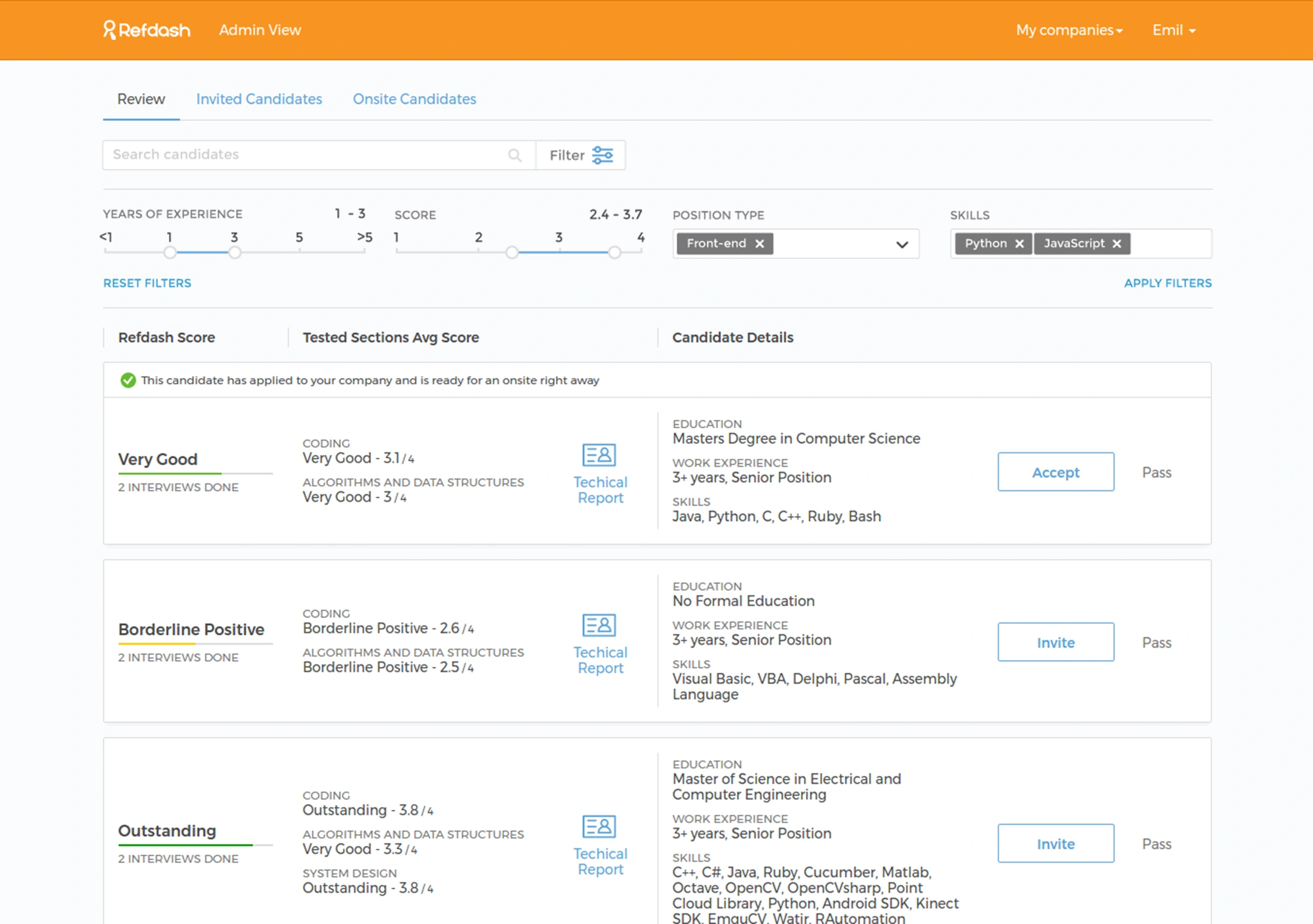
Recruiters needed a practical way to translate interview results into hiring decisions. In the shipped company dashboard, they could filter and review candidates using requirements such as experience, role, skills, and assessment scores; access technical reports; and move candidates through the review, invitation and onsite stages.
Matching brought relevant results to the surface, but the dashboard also had to make the information scannable enough for recruiters to act on it. Anonymized reports provided the initial technical evidence; companies could request resumes when they were ready to explore a candidate further, without making that disclosure mandatory.
Challenges beyond screens
The main constraints we faced were interconnected and not all could be solved through UI improvements.
Three different workflows, one product. Each role needed appropriate tools and clarity, while actions and information needed to move reliably between them.
Employer integration. Many clients already relied on established applicant-tracking and sourcing software. We recognizing that adoption depended on integrating into existing workflows rather than making companies duplicate their work.
Interviewer capacity and candidate no-shows. High-quality interviews relied on qualified human interviewers, whose availability was finite. Missed appointments wasted this scarce capacity.
Maintaining a qualified candidate pool. Balancing the supply of interviewers, candidate quality, and employer requirements became an ongoing operational challenge as companies required enough candidates with relevant and demonstrable skills.
Scope and polish under time pressure. As a small team, we sometimes shipped reduced versions of planned functionality so we could keep delivering value. Some more ambitious functionalities never reached production.
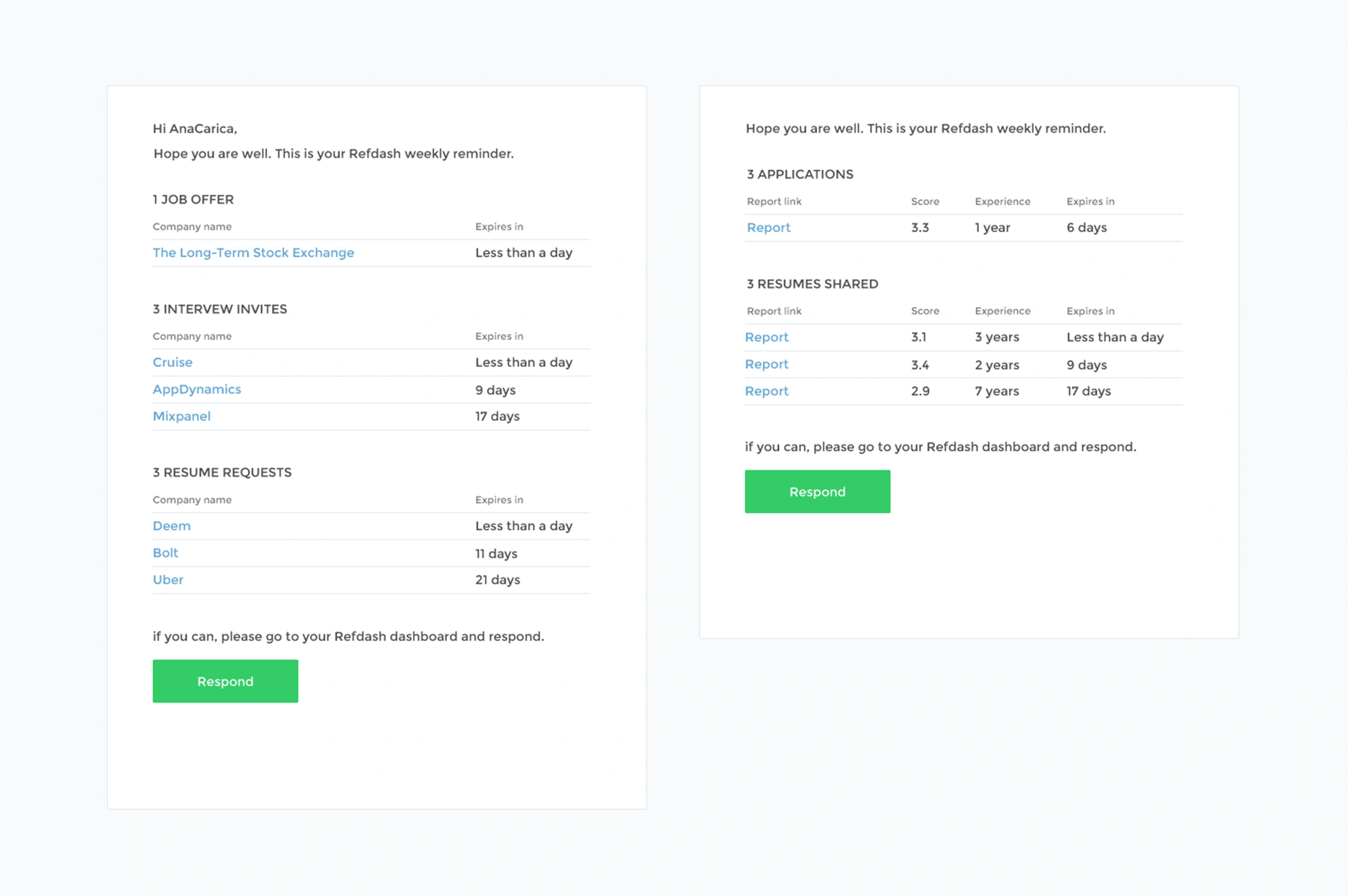
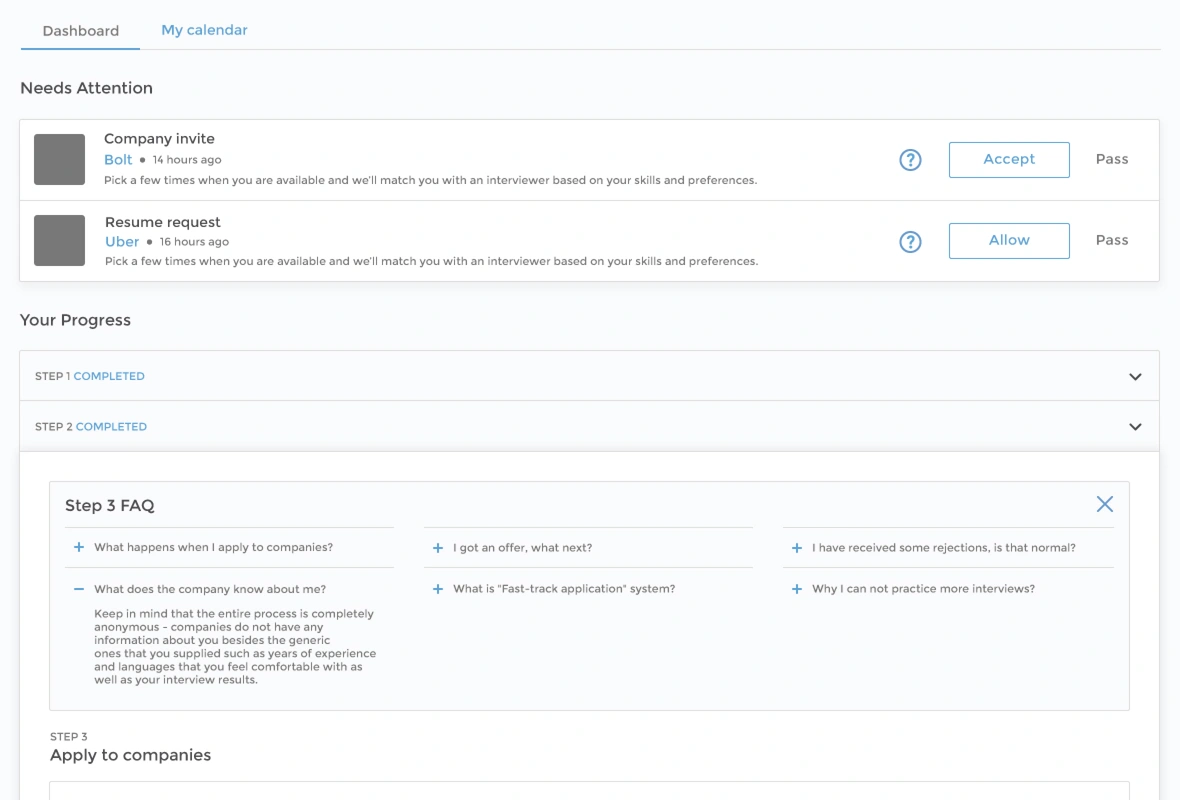
Product-direction concepts
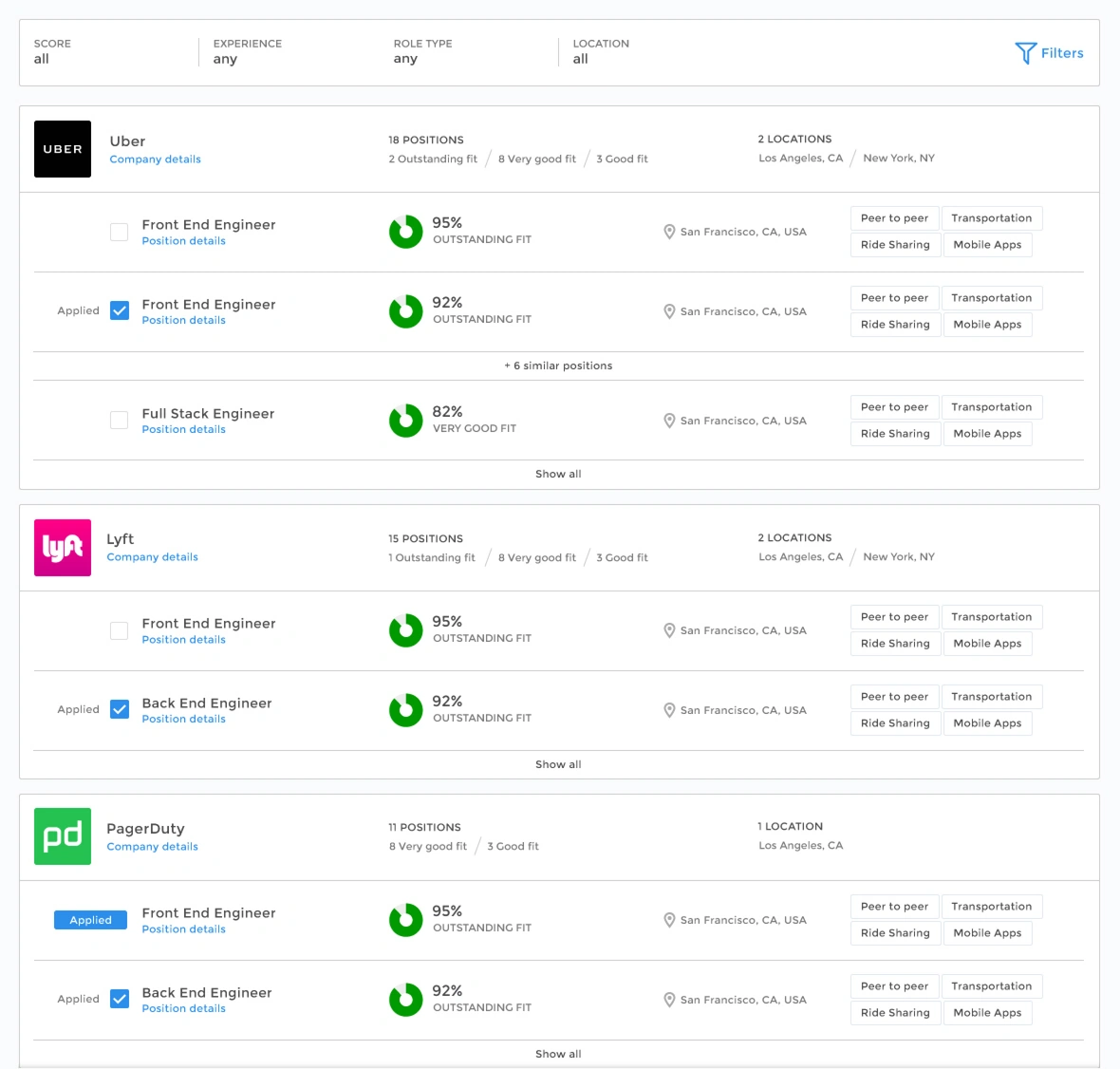
As we learned from candidates and hiring teams, I explored more advanced functionality. The following screens are unreleased design explorations.
From an idea to a growing interviewing platform
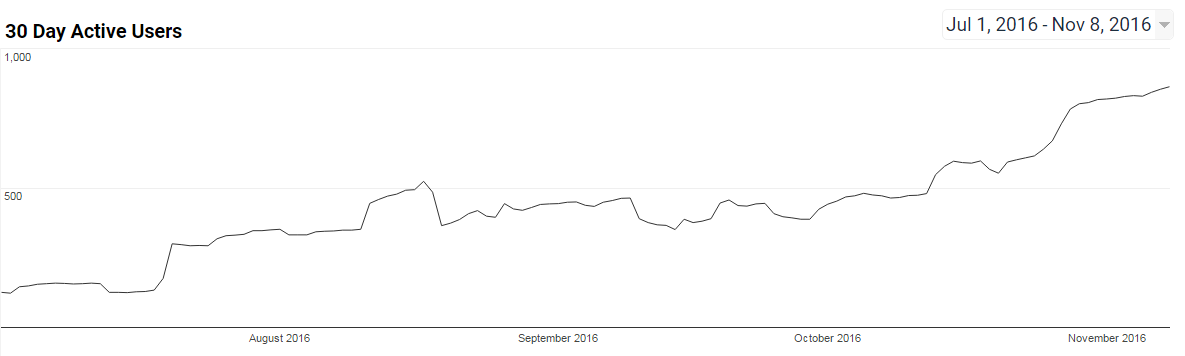
Refdash evolved from a concept into an operational service; Its early traction was visible in product analytics and reflected in the interest we received from users and companies.
- ~1,200 30-day active users by November 2016, as shown in an original analytics screenshot covering July–November 2016.
- 60+ interviews per month done by the software engineers from Google and Uber.
- 5,000+ interviewscompleted during the product's lifetime.
- 15+ companies onboarded and succesfully used the product.
- 600k+ revenue over the period of 2 years.
In October 2018, Refdash was acquired by Facebook. This marked an important milestone in the startup's story, but unfortunately the end of my engagement.
Reflection - What I'd change
Design for the ecosystem. A change to one interface could affect candidates, interviewers and recruiters across the entire workflow. Owning that connection mattered as much as refining individual screens.
Prioritize integrations earlier. I would investigate employer HR stacks sooner and make fitting into existing recruiting processes a core product requirement.
Set clearer quality standards. Scoped-down releases helped a small team keep learning, but I would now define stronger quality criteria for critical journeys and visual consistency.
Refdash shaped my approach to product design: working across strategy, interaction, implementation and validation, with responsibility for the experience beyond the design file.